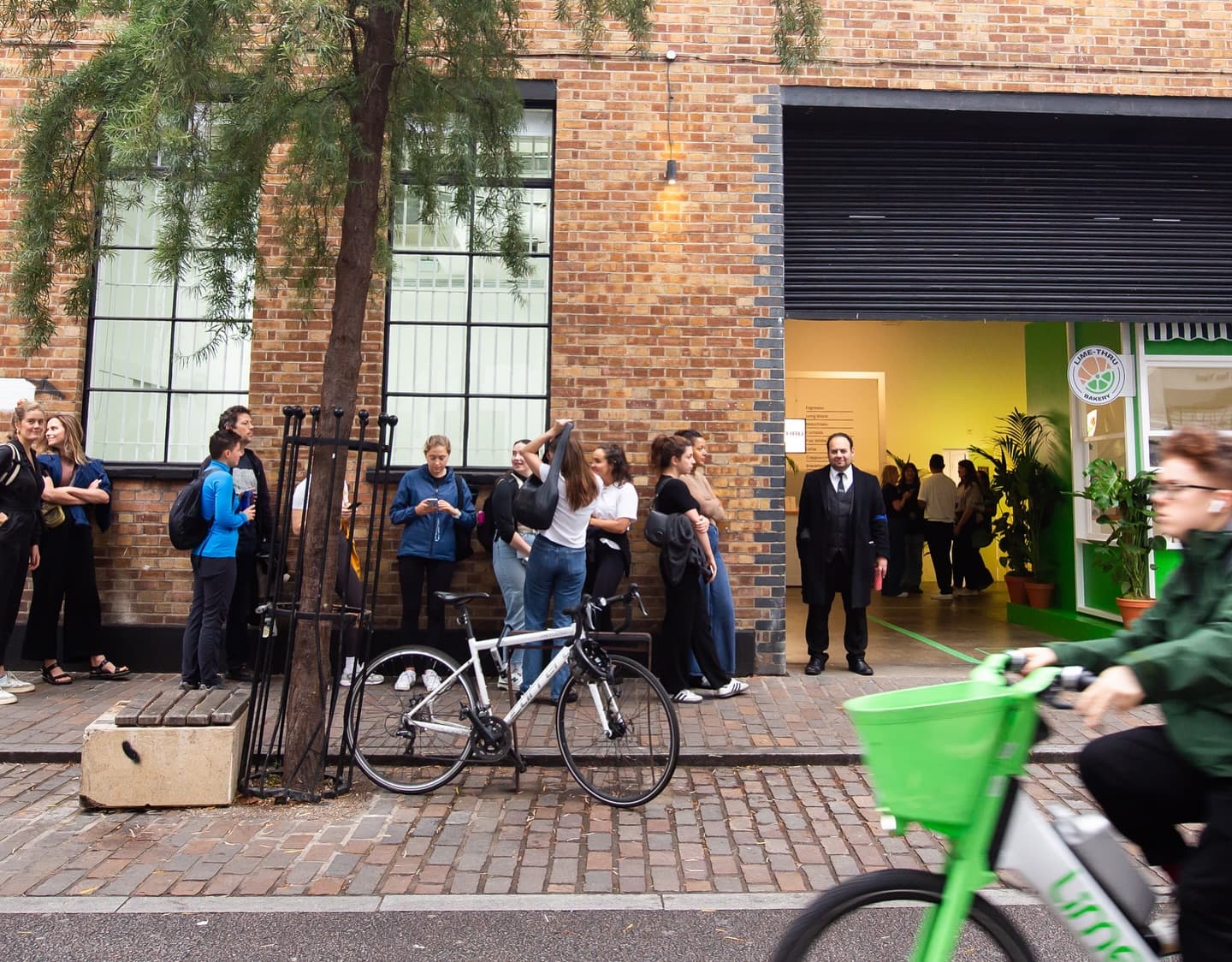
LimeBike wanted to do something for their riders. Not a billboard, not a discount code — something people would actually stop for. The idea: a temporary coffee shop in Shoreditch where anyone could walk in and get a free specialty coffee and a custom cronut. And if you arrived on a Lime bike, you didn't even need to get off — there was a street-facing bike-through window where riders could pull up and get served directly.
The catch was the timeline. We had less than a month to go from first conversation to doors open. No venue. No menu. No staff. Just a brief and a deadline.
The Brief
LimeBike's marketing team came to us with a clear vision and almost no infrastructure to support it. They wanted a branded coffee experience that felt generous and well-made — not a sampling stand with paper cups and a pull-up banner. The space needed to work on two levels: a comfortable indoor coffee shop with seating and a full bar, and a street-facing bike-through window where Lime riders could pull up and order without dismounting. Everything free to customers, everything on-brand, everything good enough that people would talk about it afterwards.
They also wanted something on the menu that people couldn't get anywhere else. That's where the cronuts came in.
The brief, in short: find a space in Shoreditch, build a coffee shop inside it, create a custom menu, staff the whole thing with trained baristas, and do it all in weeks. The pop-up would run for a single weekend under its own brand identity — Lime-Thru Bakery.
What We Did
Finding the Space
Shoreditch is full of venues. Finding one that was available at short notice, had the right footprint for both an indoor café and a bike-through service point, and sat in an area that Lime riders actually use — that was the harder part. We sourced and assessed several options before locking in a space that gave us everything we needed: good street visibility, enough square footage for a full lounge and coffee bar, and a street-facing opening we could convert into the bike-through window.
Designing the Layout
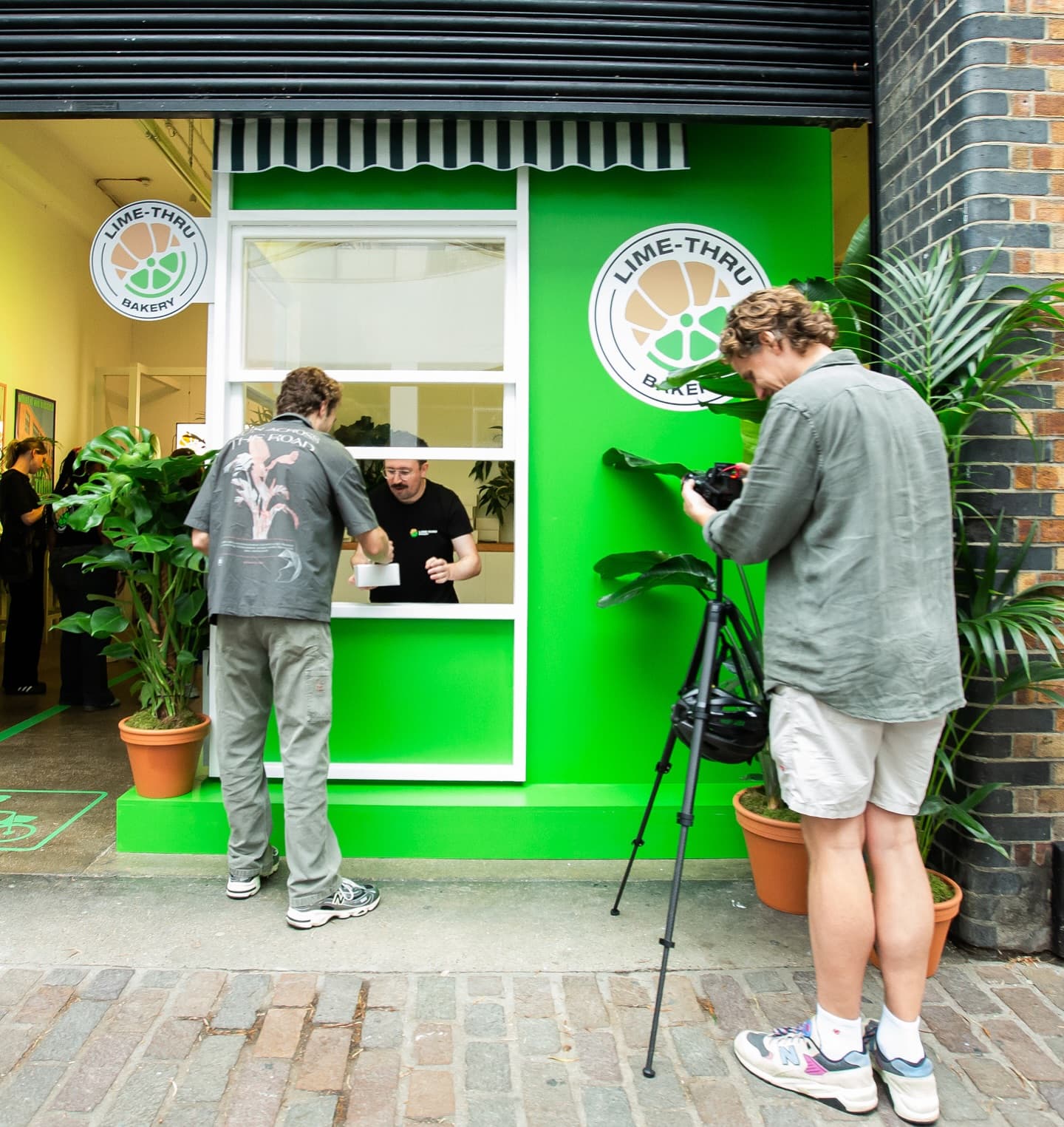
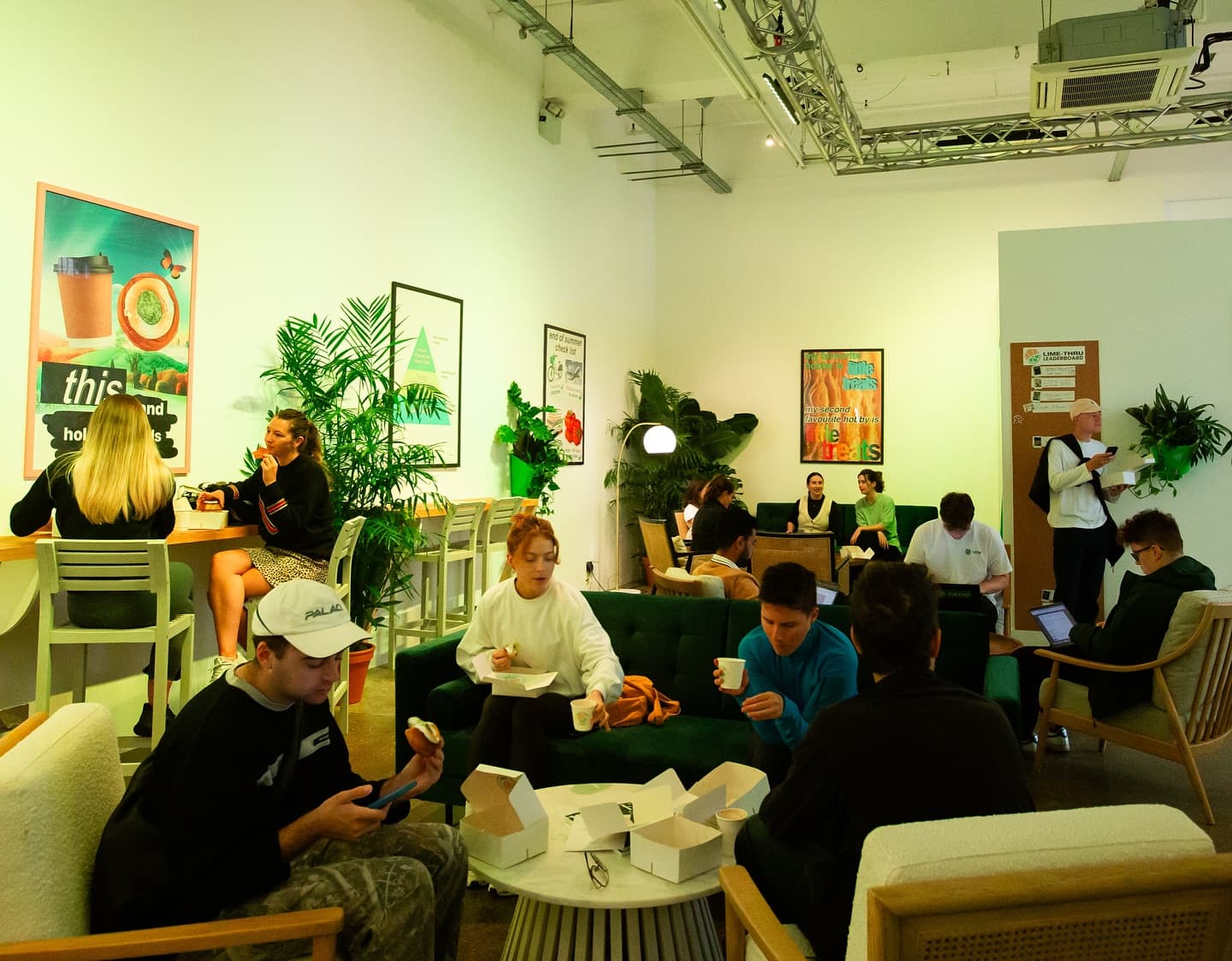
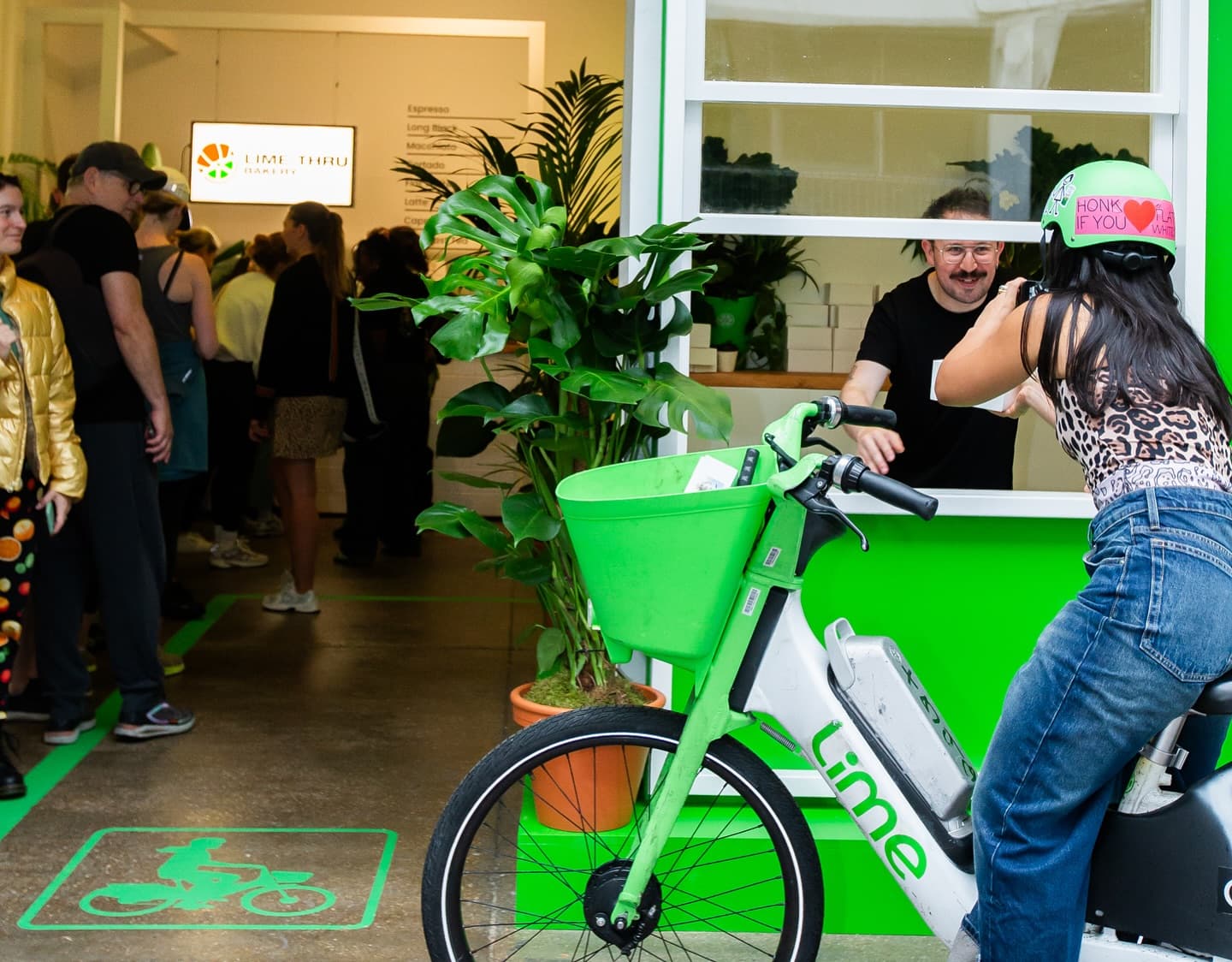
The space had to do two jobs at once. Inside, it needed to feel like a coffee shop you'd choose to sit in — not a branded event you'd been funnelled into. We set up a full coffee bar with a tiled counter and display case, comfortable seating with sofas and lounge chairs, art on the walls, and enough plants and warmth that it didn't feel like a pop-up at all. A digital screen carried the Lime-Thru Bakery branding, and a hand-written menu board ran down one wall listing the full espresso range.
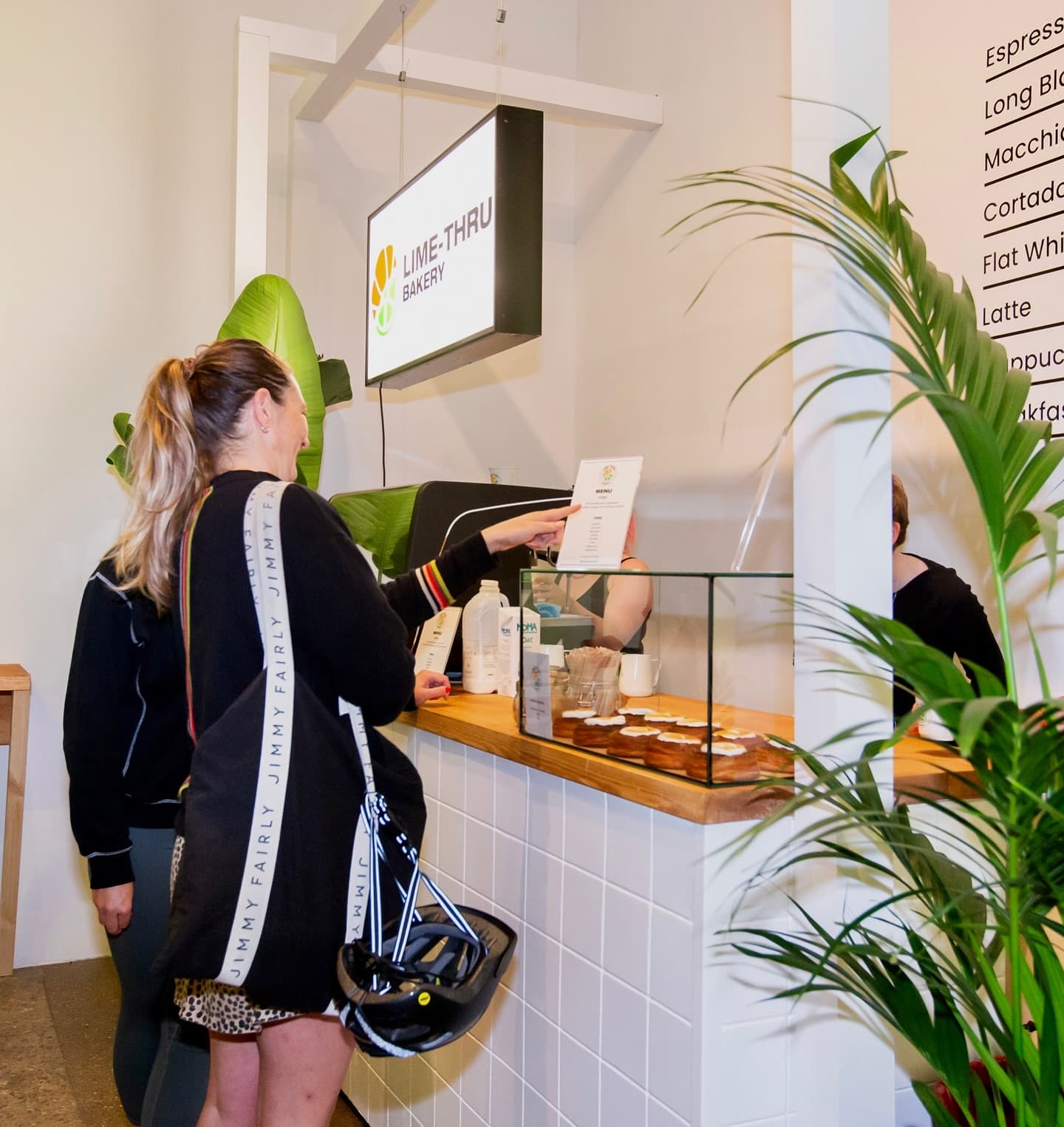
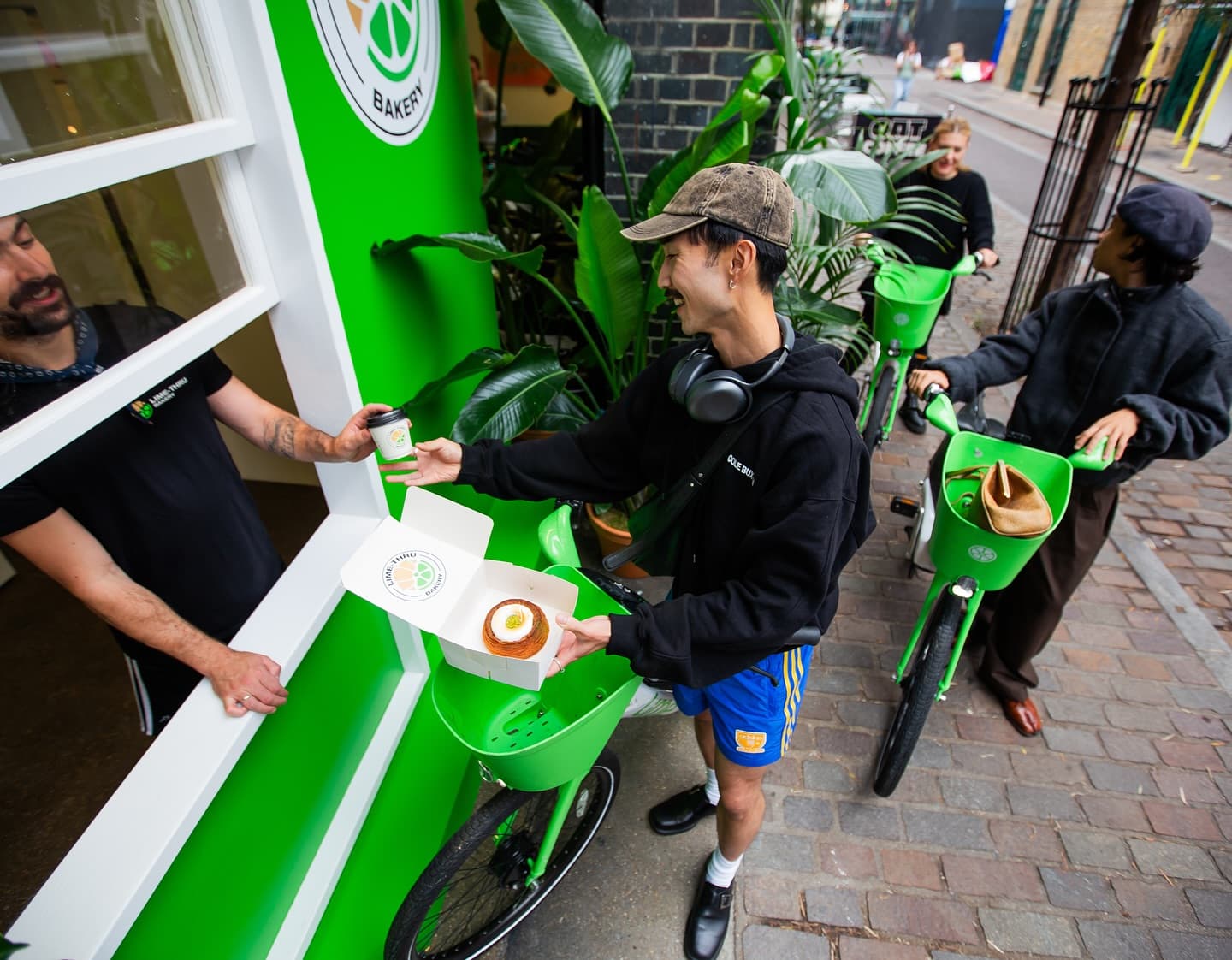
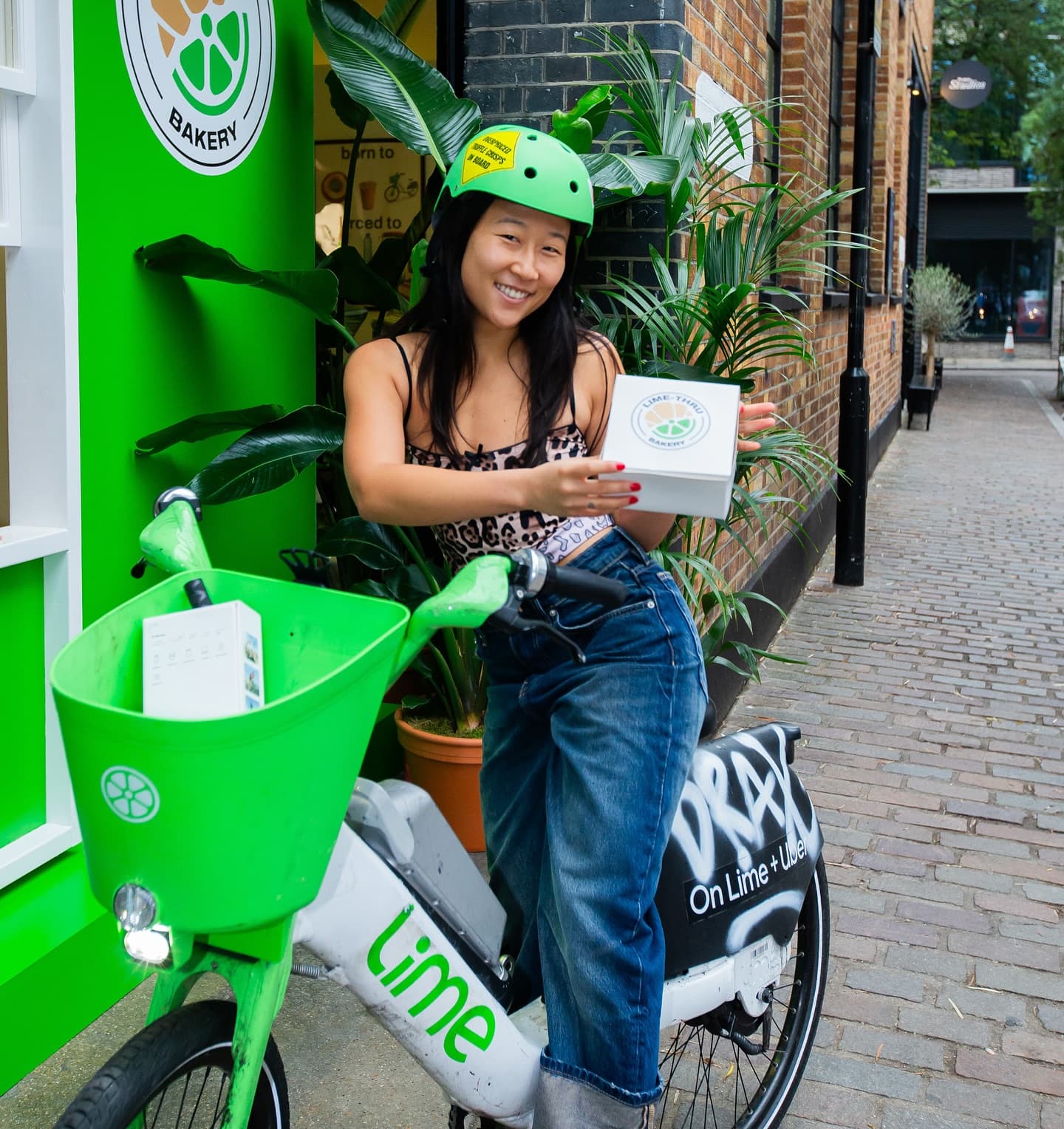
Then there was the bike-through. We converted a street-facing opening into a dedicated service window — bright green surround, the Lime-Thru Bakery logo on either side, a striped awning overhead, and potted tropical plants framing the whole thing. Lime riders could pull up on the pavement, order through the window, and ride off with a coffee and a cronut without locking up or coming inside. Inside, the bike-through theme carried through with decorative touches — a painted bicycle stencil on the floor and Lime-green detailing around the service counter — tying the two experiences together.
Sourcing the Menu
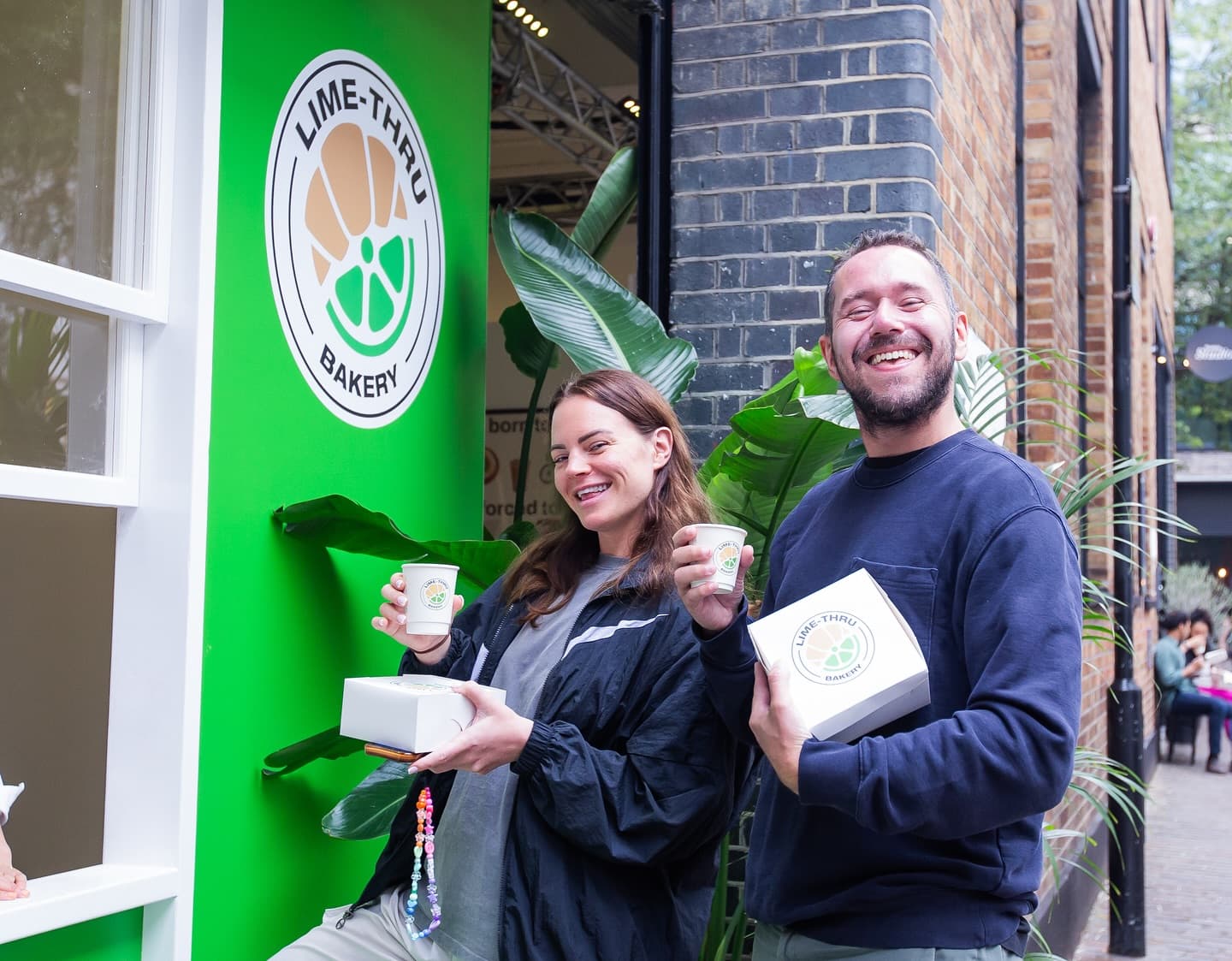
The coffee was specialty grade — properly sourced, properly extracted, served by people who knew what they were doing. We handled the full sourcing process: selecting the beans, specifying the equipment, and dialling everything in before opening day. The menu ran the full espresso range: espresso, long black, macchiato, cortado, flat white, latte, cappuccino.
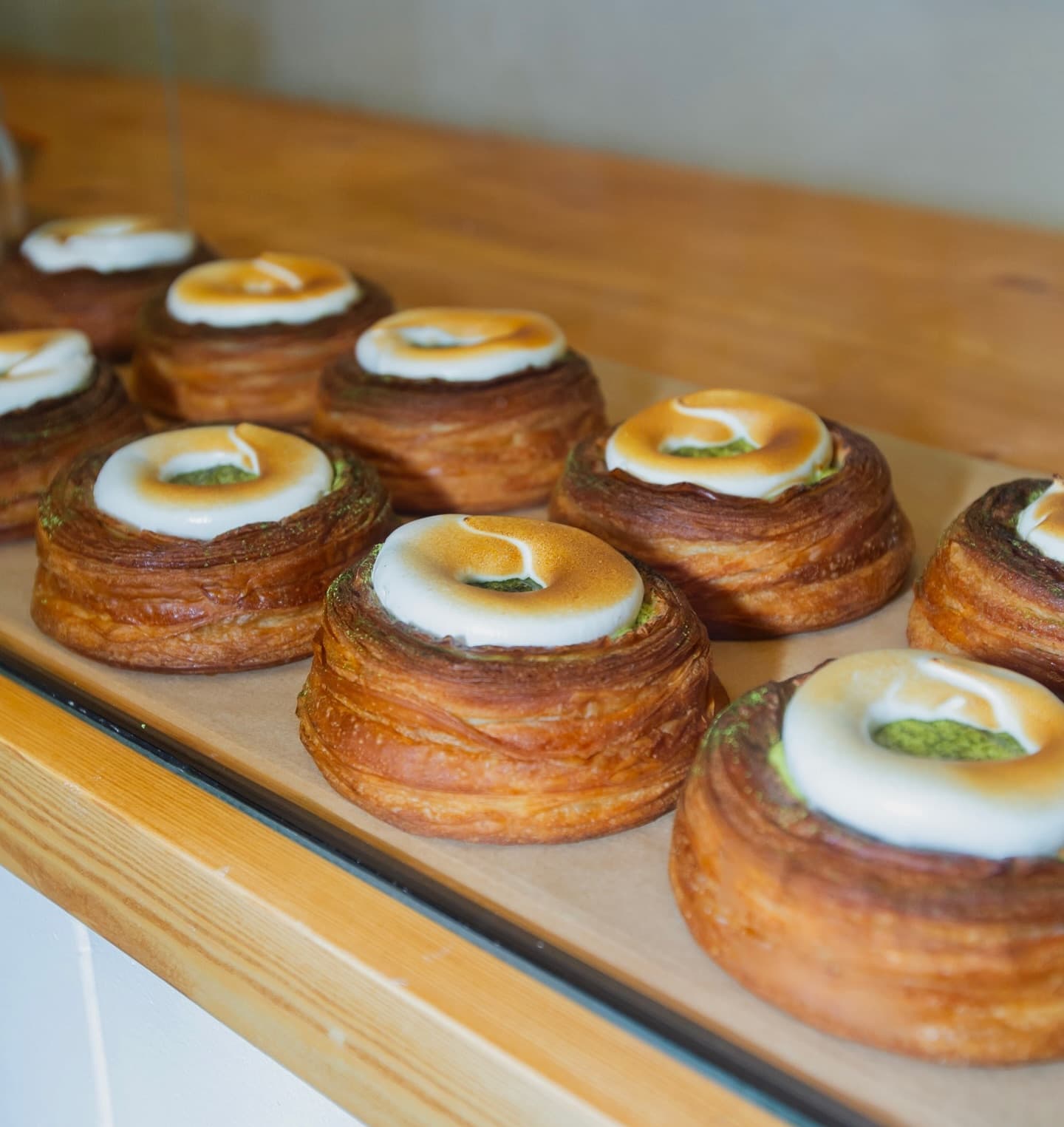
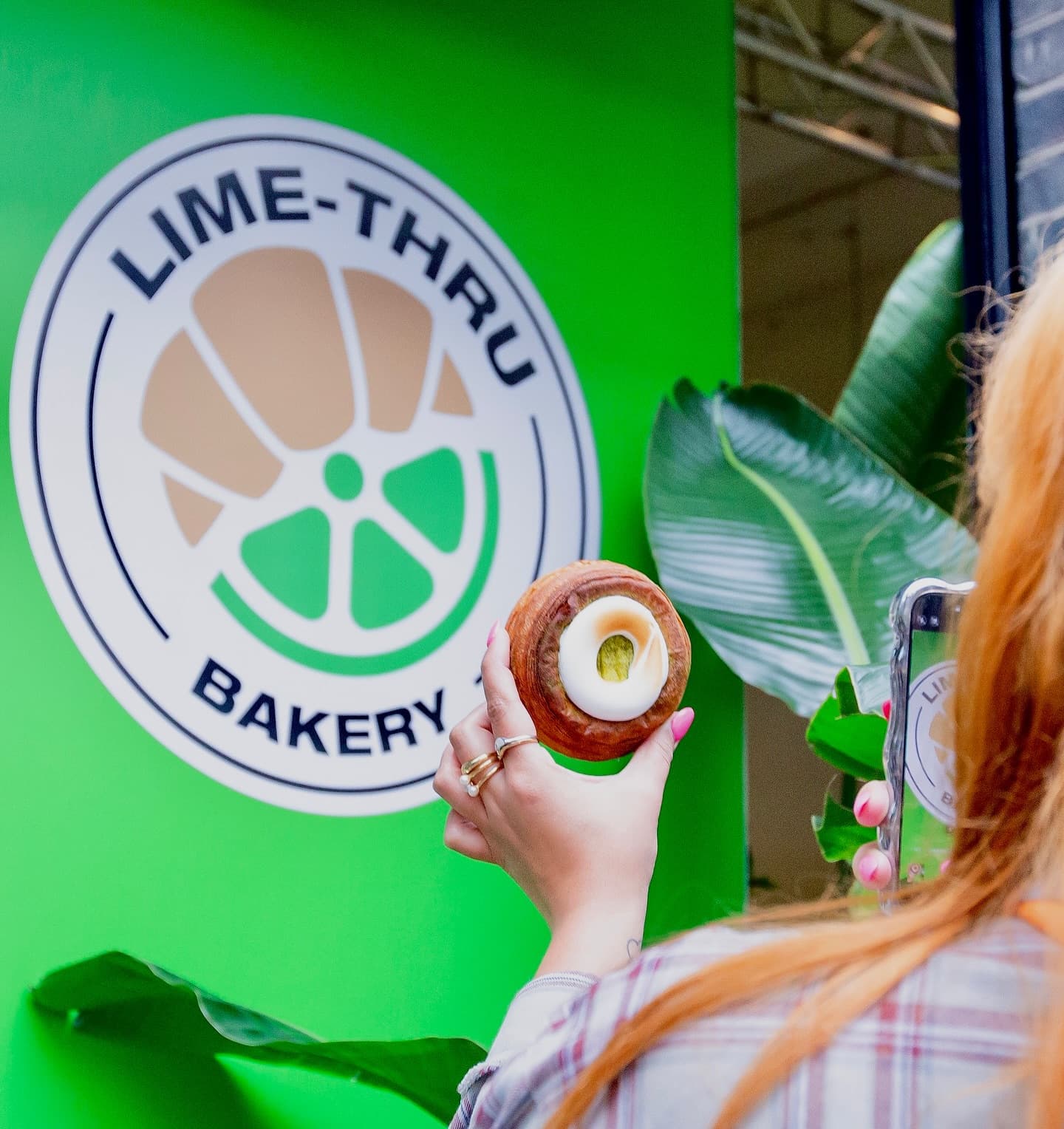
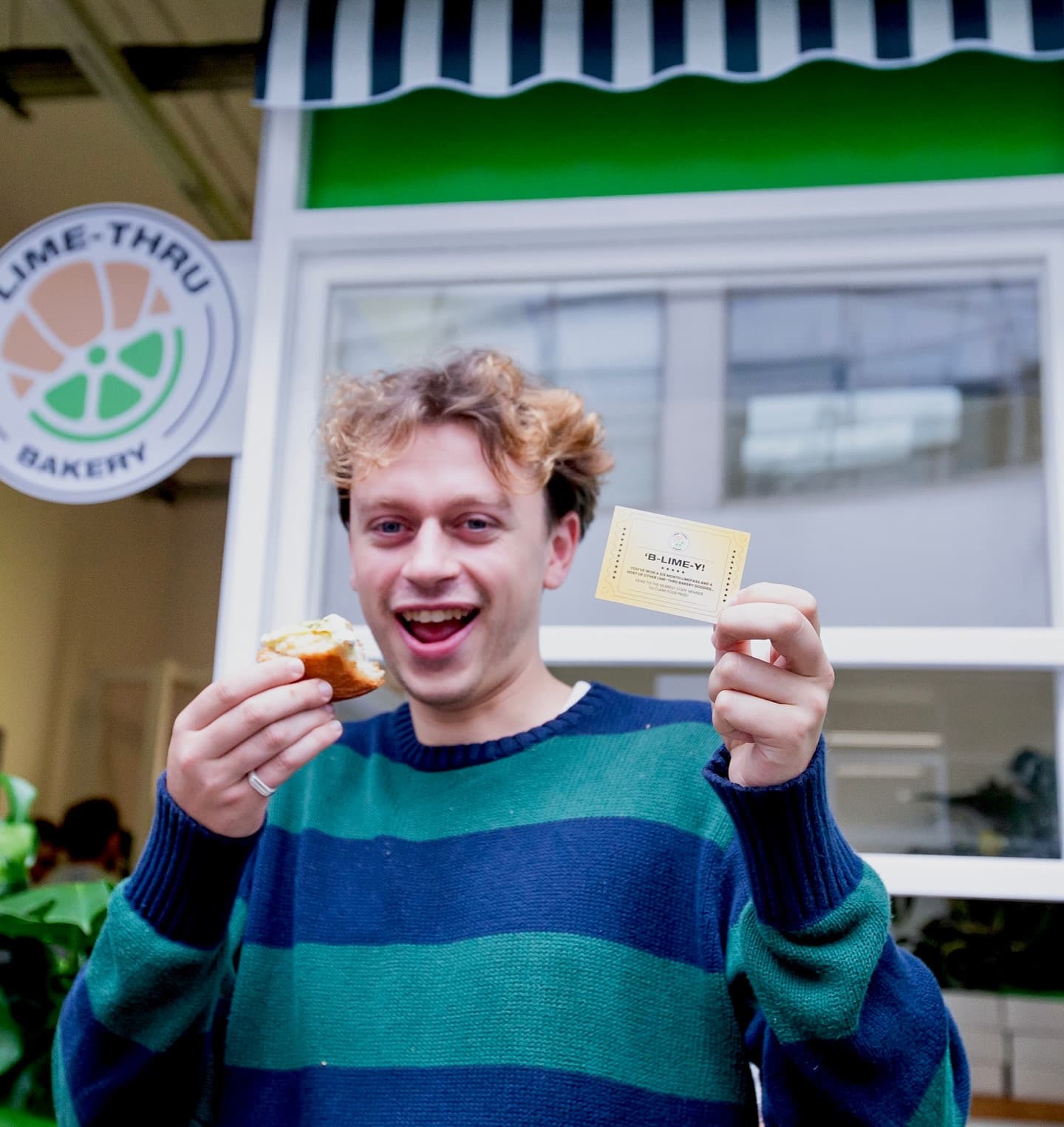
Then there were the cronuts. LimeBike wanted something custom, something that tied back to the brand without being gimmicky. We worked with a bakery to develop a lime-flavoured cronut — flaky laminated pastry with a lime filling, topped with torched meringue. They were made from scratch for the event, boxed in branded Lime-Thru Bakery packaging, and they looked as good as they tasted. That matters when you're running a brand activation — if people photograph the food, you've done something right.
Staffing
We provided trained baristas for the full weekend — people who could pull shots at volume without the quality dropping off, handle a queue, and keep the energy right. The bike-through window added a layer of complexity: you're serving people who are still on their bikes, on the street, often in a hurry. That needs a different rhythm to indoor table service.
Branding and Signage
We worked alongside a signage partner to build the Lime-Thru Bakery identity across the whole space. The exterior was transformed — a bold green facade, the Lime-Thru Bakery logo (a clever cronut-meets-lime design), a striped awning over the service window, and tropical plants flanking the entrance. Inside, the branding carried through on the digital screens, the menu boards, the cronut boxes, the coffee cups, and even a "B-Lime-Y!" golden ticket tucked into orders — good for a free month's Lime pass and other perks. The whole thing had its own visual world — it felt like a real bakery, not a marketing exercise.
The Result
The pop-up ran for a single weekend. Over 2,000 people came through — a mix of Lime riders using the bike-through and walk-ins who spotted the queue from the street (and there was a queue). Inside, people sat down on the sofas, stayed a while, and came back for second rounds. The bike-through created a constant flow of riders pulling up outside, collecting their coffee and cronut through the window, and heading off — exactly the kind of visible, shareable moment that makes a brand activation work.
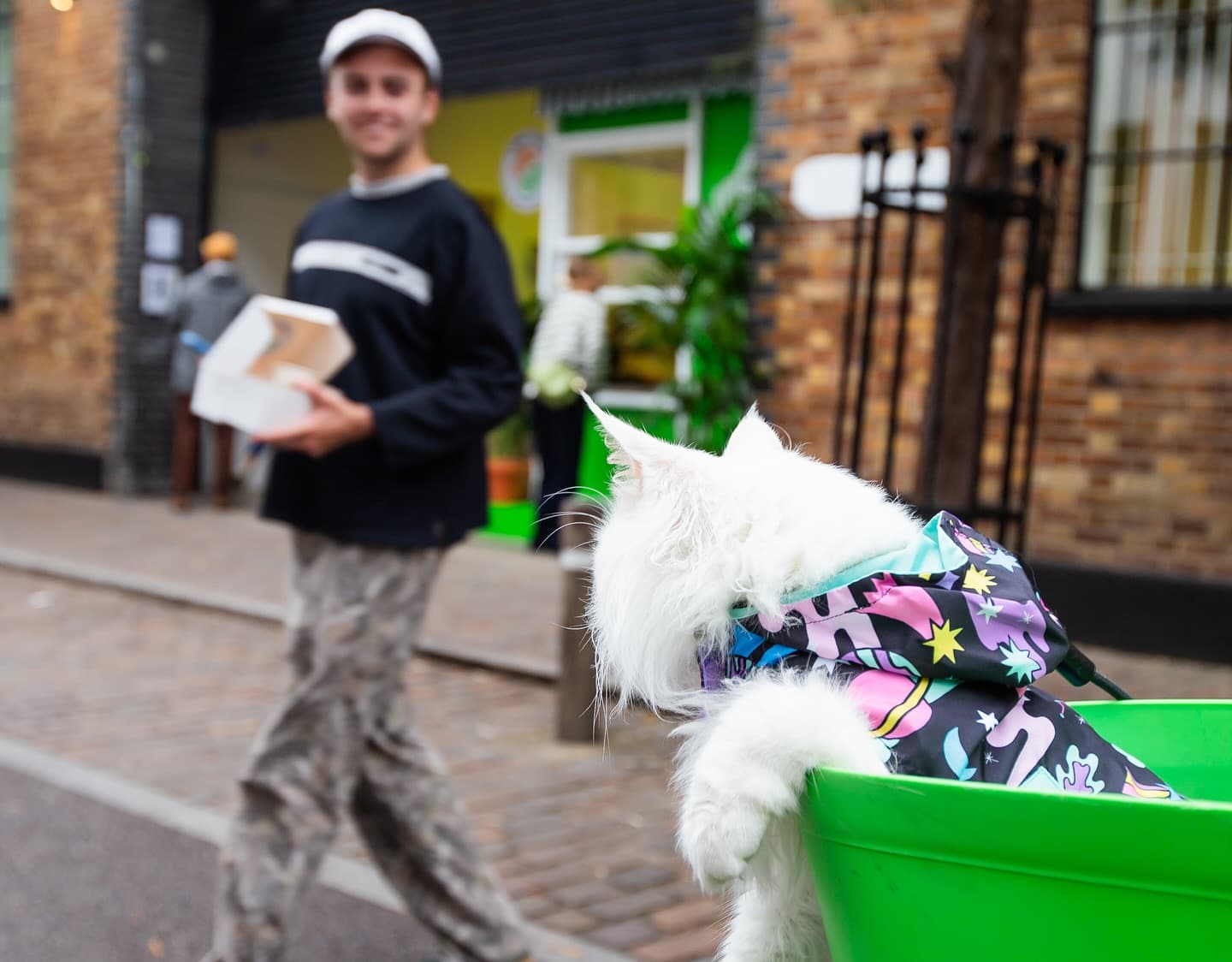
For LimeBike, it did what a good brand activation is supposed to do. It put their name in a context that felt generous rather than transactional, gave people an experience worth sharing, and proved that a bike-through coffee window isn't just a fun idea — it actually works.
For us, it was a test of what's possible under pressure. Venue sourcing, menu development, custom food production, staffing, fit-out, branding — all delivered end-to-end in under a month.
What This Project Says About Pop-Up Coffee
Most pop-up coffee activations feel like exactly what they are: temporary, compromised, and a bit apologetic. The drinks are average, the setup looks like it was assembled that morning, and the staff are borrowed from somewhere else.
It doesn't have to be that way. If you treat a pop-up with the same care you'd give a permanent site — good coffee, considered design, people who know what they're doing behind the bar — the result is something people actually want to spend time in. And when it's a branded activation, that difference is the whole point. Nobody talks about a mediocre free coffee. They talk about a good one.